
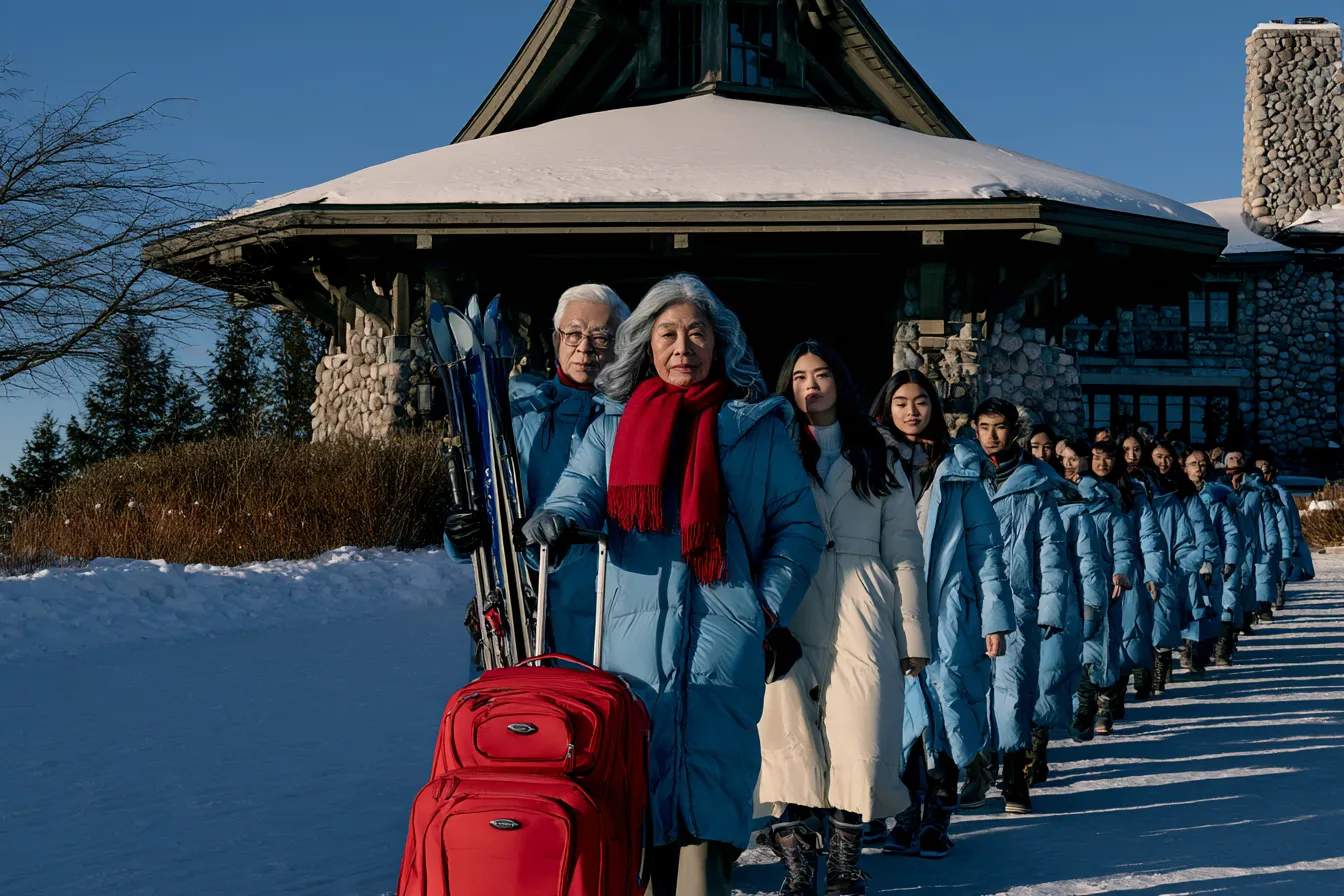
The Henderson-Chen family arrives in Boyne Falls with three generations, two cars, and absolutely no intention of doing the same thing.
Grandpa wants coffee and a newspaper. Mom and her teenage daughter want the steepest skiing they can manage. Dad takes the youngest to a beginner lesson. Aunt Jessica plans on spending most of the afternoon somewhere warm.
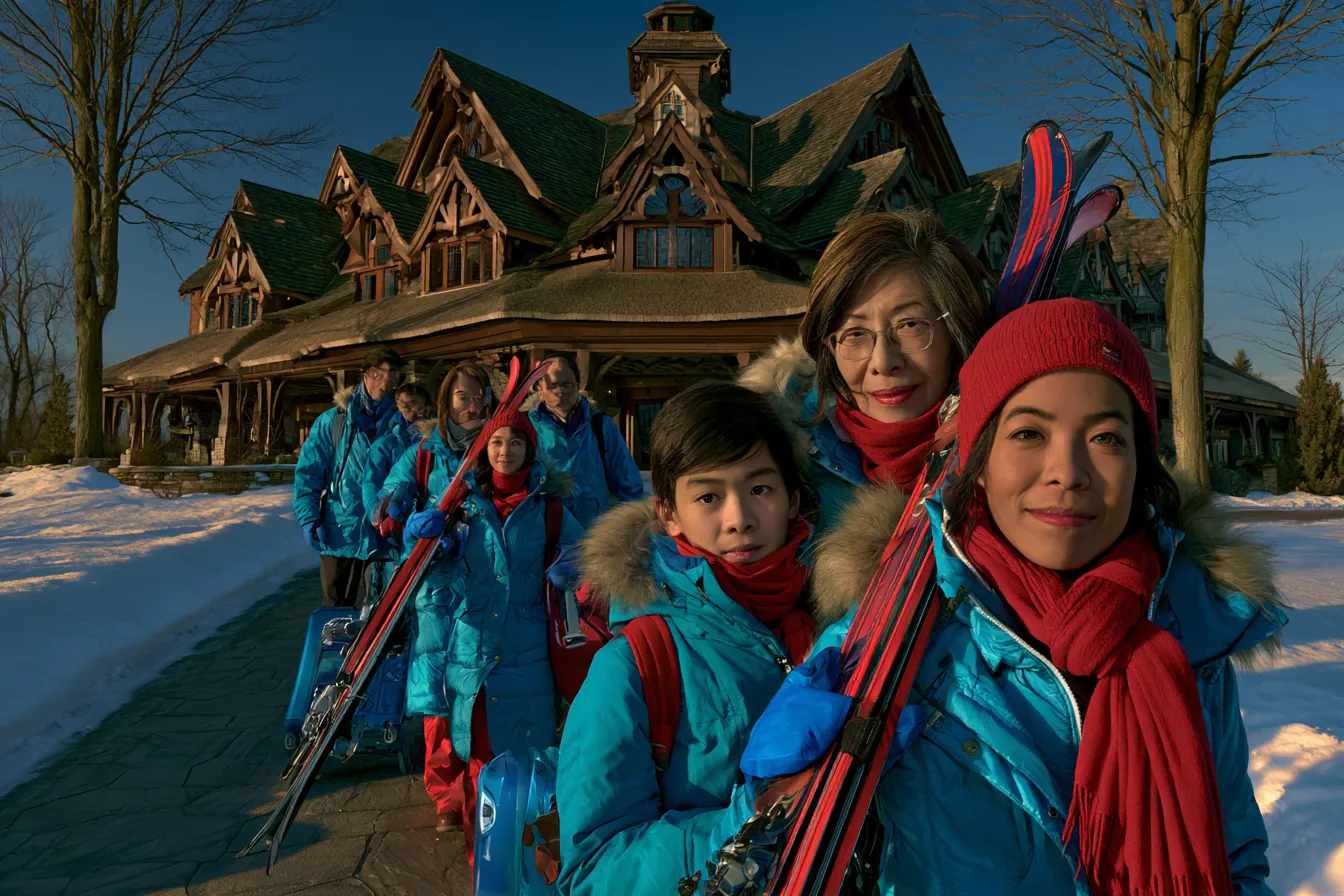
The initial group chat reads like a logistical crisis. Grandpa doesn’t do chairlifts. The teenagers want to start before sunrise. Someone requires a pool, specifically the one at Avalanche Bay. Someone else wants a nap. Jessica asks whether there will be reliable coffee and refuses to elaborate. At the rental house, boots gather in a damp pile by the door as everyone makes competing arguments for the next day. Mei Chen takes the paper itinerary her husband has printed and divides it into circles labeled ‘morning,' ‘lunch,' and ‘whenever.' She isn’t interested in forcing twelve people onto one trail. She is interested in knowing where they’ll all meet and who is responsible for the youngest children. Suddenly it seems manageable. At breakfast the skiers disappear toward Boyne Mountain in a noisy cloud of helmets, while Grandpa lingers over a newspaper and a second pot of coffee. Jessica accompanies him into Boyne City. Nobody has to pretend those plans are less legitimate than skiing.
The practical details turn out to matter more than any inspirational idea about togetherness. The family agrees on a meeting place that everybody can find, labels the little kids’ gloves, and checks whether the afternoon plans depend on weather. Grandpa has his own comfortable route and knows where to meet the group. Nobody pressures him to ski for the photographs. At breakfast, a teenager who usually rolls her eyes at family activities quietly helps her youngest cousin get a helmet fitted. Mei notices and says nothing. They are good at caring for one another when they aren’t being asked to do it as a performance. By midmorning the group has split into several cheerful fragments. Text messages move back and forth about mittens, soup and where someone has parked, but no one is expected to provide a minute-by-minute report. The day feels pleasantly unscheduled despite all the planning.
The day makes room for a surprising number of different stories. Mei’s daughter discovers she likes the confidence of a faster run. A little cousin declares the beginner lesson too slow until he realizes how much work it takes to turn without falling. Jessica finds a table at Café Sante whose windows fog from the wood-fired oven, and Grandpa tells her a story about his first winter in Michigan, when he believed snow tires were a luxury. By lunch they have all returned with reports that have almost nothing in common. The youngest child describes a heroic encounter with an orange practice cone. Grandma announces that her walk was the best thing anyone did all morning, though she has no evidence. They sort out the afternoon by asking rather than assigning. Someone floats the après crowd at Schnitz Mountain Bar; the vote for the rental house is immediate. That night, jackets dry near the entry, someone burns the garlic bread, Jessica claims the couch under the Cabin Issue throw, and a game of cards grows so loud the children abandon their screens to investigate. The photographs from the trip won’t show a family skiing together in perfect formation. They will show the same family doing a dozen different things and finding its way back to one table.
Grandma looks around the table and notices that nobody has checked their phone in nearly an hour.
“We should do this more often,” she says.
For once, everyone agrees.
Setting artwork is illustrative; it does not depict the story’s cast or document an event.