
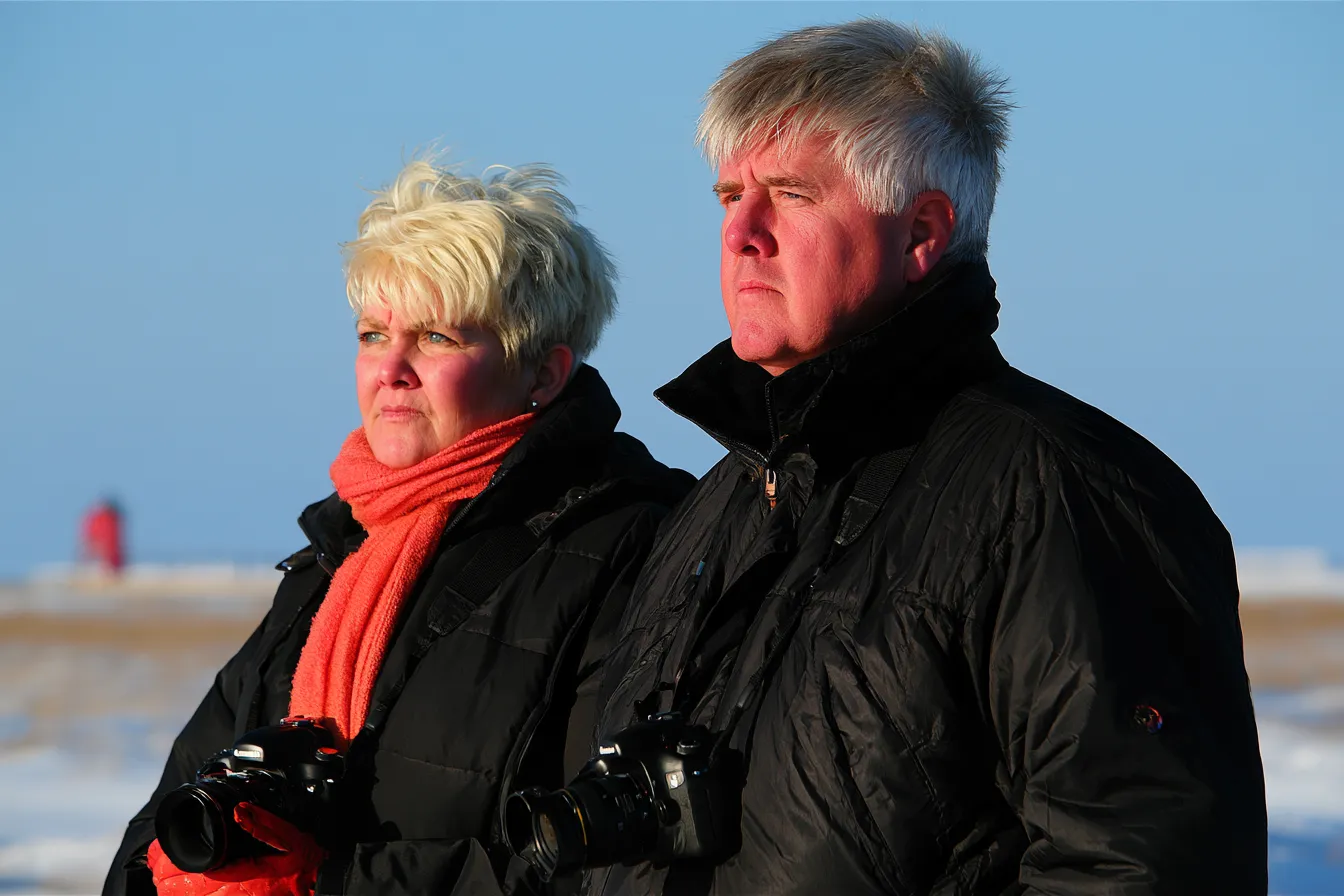
Jim and Patricia have been married forty-seven years. Every winter, they drive to Grand Haven to photograph the lake.
Jim carries an enormous camera bag. Patricia brings a smaller camera and takes better pictures. They’ve agreed never to discuss this.
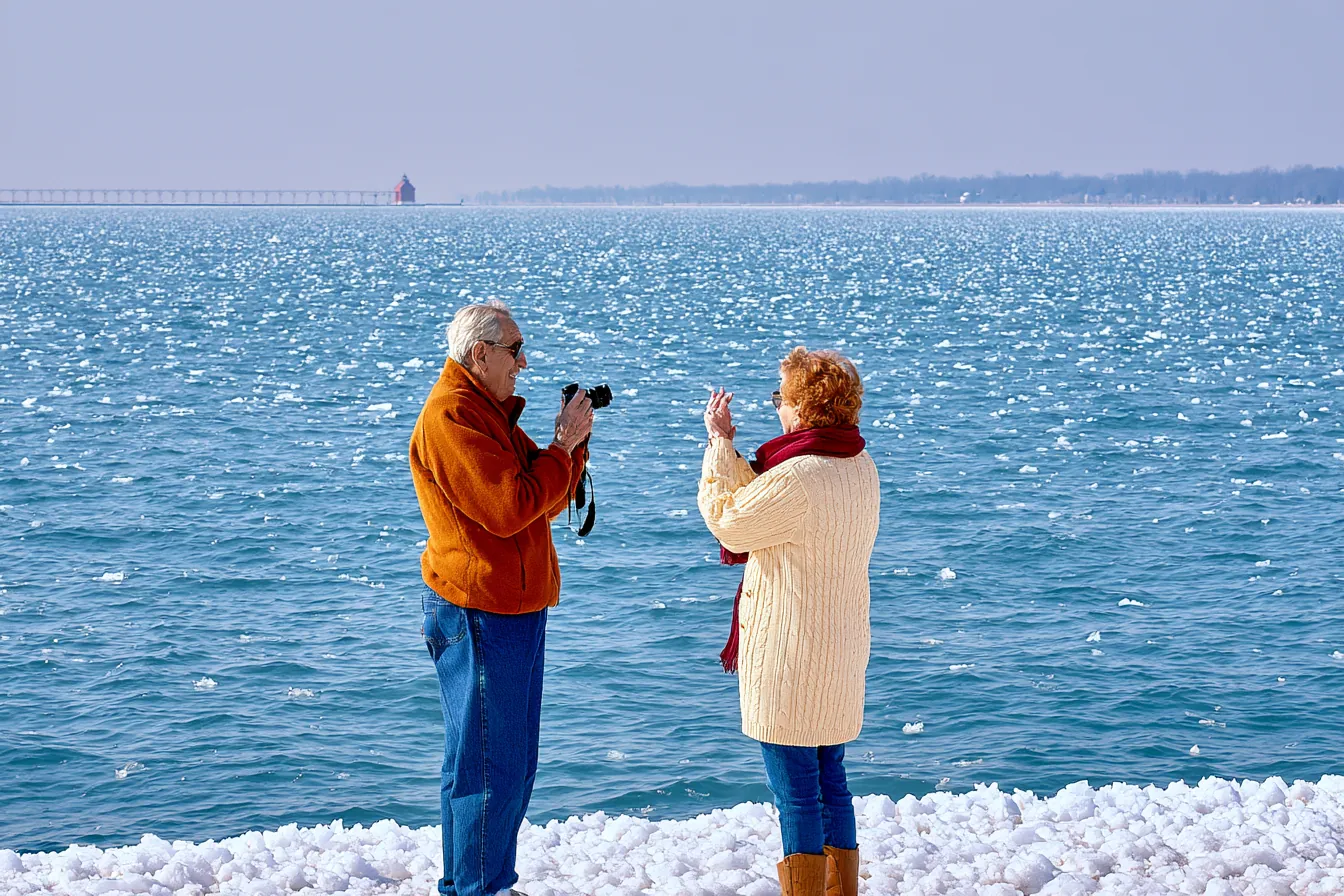
They leave the Harbor House Inn before breakfast, because Jim has looked up the sunrise in The Winter Almanac and insists winter light doesn’t wait for late risers. Patricia reminds him that the sun will still be there after a cup of coffee. In the car they argue gently over which road to take, whether a scarf counts as a piece of camera equipment, and why he keeps bringing a tripod he never uses. Grand Haven appears in pale morning color, with dark water beyond the beach and ice gathering around shoreline structures. They choose a stable public viewing area rather than approaching any ice-covered pier. Jim takes photographs almost immediately. Patricia watches the way the sun touches the edge of a cloud. After forty-seven years, she knows that his constant picture-taking is partly a way of holding onto a day. She used to tease him about it more. Now she simply waits until he notices something worth sharing.
Patricia takes time with her photographs. She walks a few yards, steps back, lowers the camera, and watches the landscape before making a frame. Jim enjoys the mechanics: lens choices, exposure settings, the joy of a perfectly straight horizon. She thinks his approach is a little like his approach to cooking—lots of careful preparation, not quite enough tasting along the way. He thinks she gets lucky. Neither genuinely believes that, and the argument has become one of the small rituals of marriage. The sky changes from gray to a pale apricot color. A gull crosses the scene and Jim raises his camera too late. Patricia watches the bird disappear and says she thinks the best moments are usually the ones that surprise you. He agrees, although he’ll deny it if she reminds him later. They pack their equipment and head toward Aldea Coffee on Washington Avenue, which they have visited many times before.
They met at a wedding where he insisted on photographing every table except theirs. Patricia remembers thinking the camera was an excuse to avoid dancing. He says it was an excuse to find a reason to talk to her. Their version of the story changes slightly depending on who has the floor, but the photographs are still in a box at home. A gust rises and Jim fumbles his glove, which lands in the snow. Patricia laughs before she can help herself. As he bends to retrieve it, she sees both their faces in the side window of the parked car: his mock indignation, her wide grin, the lake behind them. She raises her camera once. At Aldea, he begins editing his pictures on a small screen, deleting duplicates while explaining to nobody in particular why each one was nearly perfect. When she shows him her image, he stops talking. The two people in the reflection look older than the couple in the wedding photographs, naturally. They also look like themselves. He asks her to send it to him. She says he can have a print if he makes breakfast tomorrow.
“That’s the one,” he says.
Every year, somehow, it is.
Setting artwork is illustrative; it does not depict the story’s cast or document an event.